Memory Match
Test your memory by matching questions with their correct answers!
Free to play · No credit card required
About Memory Match
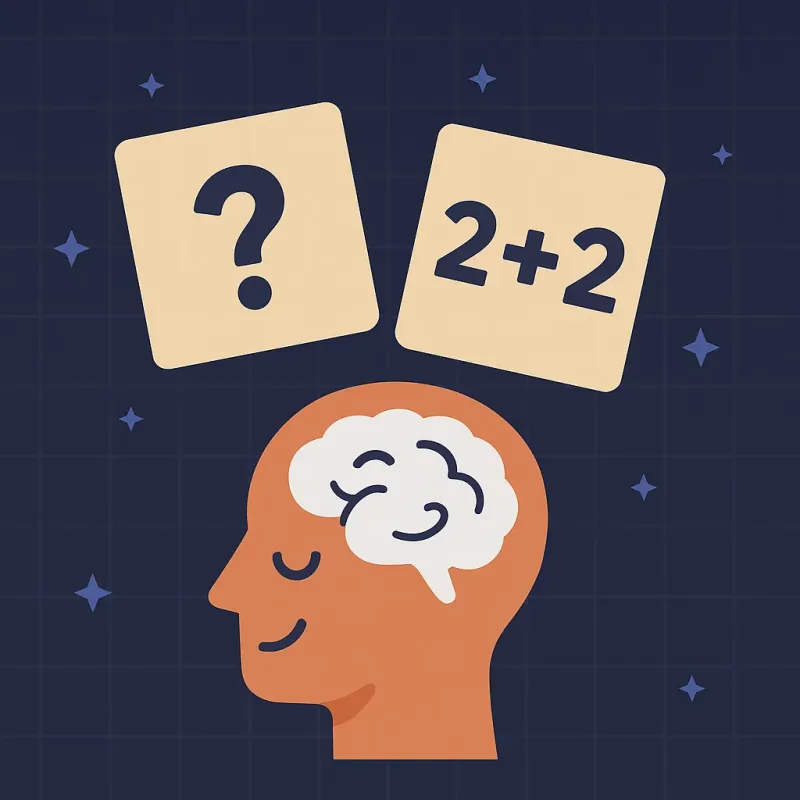
Memory Match takes the classic concentration card game and turns the pairs into question-and-answer matches drawn from your own study material. Cards lie face down on the board. You flip two at a time, trying to pair each question with its correct answer. Matches stay visible, misses flip back. The trick is that you're not only memorizing positions. You have to read and process the content of each card every time you flip it, and that's where the studying happens.
The format hits two memory-science ideas at once. There's spaced repetition, since the same pair keeps coming back while you fail to match it the first few times. And there's dual encoding, since you remember both the meaning of the content and where it sat on the board. That combination works well for material that breaks into discrete pairs: vocabulary, definitions, capital cities, formulas and their names.
Memory Match is the lowest-pressure game on StudyQuest. No timer punishing slow play, no HP draining, no one watching. The only constraint is your move count, which the game tracks so you can beat your own previous runs. That makes it a good first pass through new material, before you're ready to test yourself in something harsher like Boss Battle.
Boards scale by difficulty. More cards means more pairs and more to hold in your head. The animations are deliberate, with every flip taking a beat and every match locking in with a glow. The pacing is the point. Rushing breaks the memorization, so the game builds the slow tempo in rather than fighting it with friction.
Who Memory Match Is For
First-pass review of new material, visual learners, and anyone who finds timed games stressful.
Best Subjects to Study With Memory Match
Vocabulary pairs
Word-and-definition matching is the obvious use case. Memory Match is built for it.
Country-capital pairs
Discrete paired facts that the format reinforces through spatial memory.
Scientific names & common names
Biology genus and species, chemical compounds, and similar paired material work cleanly.
Historical figures & their contributions
Pairs a fact with its context, which is how this material usually gets tested.
How to Play Memory Match
Beautiful card flip animations
Track your moves and time
Perfect for spaced repetition learning
What You'll Learn
Active Recall
Every question forces your brain to actively retrieve information, strengthening neural pathways and long-term memory.
Instant Feedback
Know immediately whether your answer was correct. AI explains the right answer when you get it wrong, turning mistakes into learning moments.
Gamified Motivation
Points, streaks, and progression systems keep you engaged longer than traditional studying. You study more because it feels like play.
Any Subject
Upload any study material — biology, history, math, language learning, exam prep. If it's in your notes, it becomes a game.
Game Details
Ready to Play Memory Match?
Upload your study notes, let AI generate questions, and start playing in under 2 minutes. Works with any subject.
No credit card required · Free forever plan available


.webp)